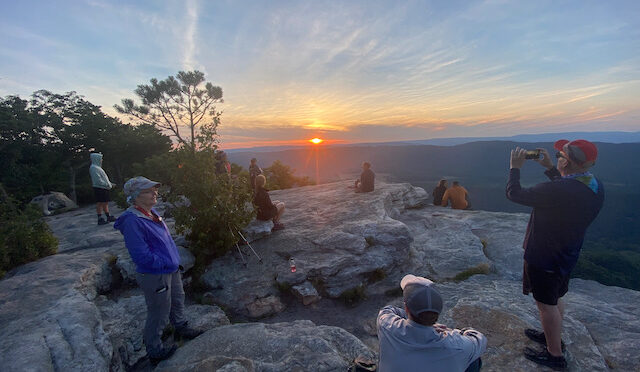
The days are growing darker by … well, by the day. And while most folks don’t see this situation improving for another 20 days until we hit the low point with the Winter solstice, the optimists among you no doubt have your hopes pinned to this Sunday, Dec. 7.
True, the shortest day of the year, in terms of actual daylight, is Dec. 21, when we’re down to just 9 hours, 42 minutes and 59 seconds of daylight. However, this Saturday (Dec. 6), the sun sets at 5:04:52 p.m. (in north central North Carolina). But on Sunday, it goes down a full two-hundredths of a second later, at 5:04:54 p.m. Yup, on Sunday we start seeing more afternoon daylight. OK, maybe you won’t actually see it, but it will be there. You’ll have slightly more luck noticing the difference by Saturday, Dec. 13, when the sun will set at 5:05:49, more than a full second later than this Sunday.
Granted, you can’t do much with that second — maybe get in an extra step of daylight on the trail. But you can rejoice in the psychological boost of simply knowing the sun is setting later. (For you morning people the sun won’t start rising later until Jan. 7!)
When will we start noticing a later-setting sun? On Jan. 7 it will set at 5:21 p.m. (about 16 minutes later than on Dec. 7), On Feb. 7 it sets at 5:52:47 (about 47 minutes later), and on March 7 at 6:20:27 p.m. (an hour and 15 minutes later). FYI, Daylight Saving Time kicks in on Sunday, March 8: sunset that day will be at 7:21:22). You’ll really notice the difference then.
Need another milestone to get you through winter? Imbolc, the midpoint of winter and a day of celebration in many cultures, is Feb. 1.
For the time being, though, take solace in the fact we will have more afternoon sunlight starting Sunday. Make the most of it.
* * *
Count the seconds
Follow the return of sunlight at sunrise-sunset.org.