Our two favorite times to be in the trail in winter: sunrise and sunset. They’re great year-round, frankly, but much more accessible in winter: Sunrise today is at 7:21 a.m., sunset at 5:34 p.m.
If you have to ask what’s so special about these two golden hours of the day, then you’re probably not a hiker. Or possibly in possession of a pulse. Personally, we love the moment-to-moment change as the sky evolves from yellow to pink to orange to crimson to purple. If we sense the conditions for a good sunset, we’ll dash to the local summit in town, Occoneechee Mountain, which affords an open view to the west: sunset over the Eno River Valley is one of the best. We’re pretty crazy about certain other sunsets as well: from Shortoff Mountain at the south end of Linville Gorge, from atop Shining Rock in the Pisgah National Forest, from Little Long Mountain in the Uwharrie National Forest, from Hump Mountain on the Appalachian Trail. We’ve even seen the queen mother of sunset phenomena: the elusive green flash, a prismatic neon burst that lasts just a second or two, which we saw over the Pacific Ocean years ago in Hawaii.read more
I got into the business of leading hikes about a decade ago for one reason: Hiking did a lot for me, I thought it might do the same for others. Since I got the most mental benefit from a hike when I was alone, I assumed others would as well.
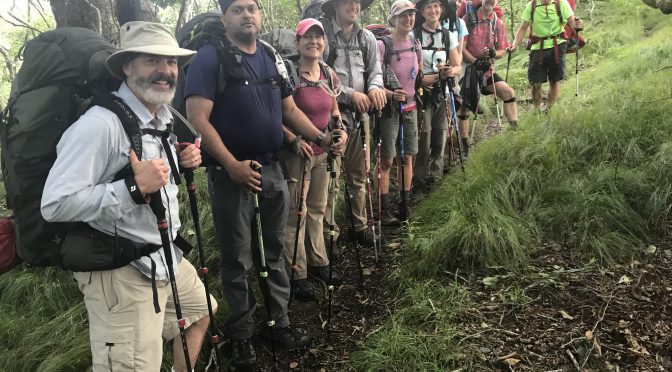
So rather than just leading hikes, I hoped to empower those with me to feel comfortable hiking on their own. Expose people to a variety of trails, on varying terrain, in a variety of conditions, both day and night, and it wouldn’t be long before I might see them just once or twice a year because otherwise they’d be exploring on their own. I even created a class, GetOriented! Finding Your Way in the Woods, to teach basic map and compass skills and how to read a topo map and the terrain. All the tools.read more
Fire, when it comes to the natural world, is often associated with loss — the loss of trees, of shrubs, of grasses, of animal life. But it also plays a key role in keeping the forest alive. This year, North Carolina is celebrating that role, proclaiming it the Year of Fire in its State Parks. read more
At a trip planning meeting for our backpacking trip on the AT this weekend, we were about to wrap up when one last thought occurred.
“Oh, and be prepared for the nights,” I added. “They can be long.”
Really, really long.
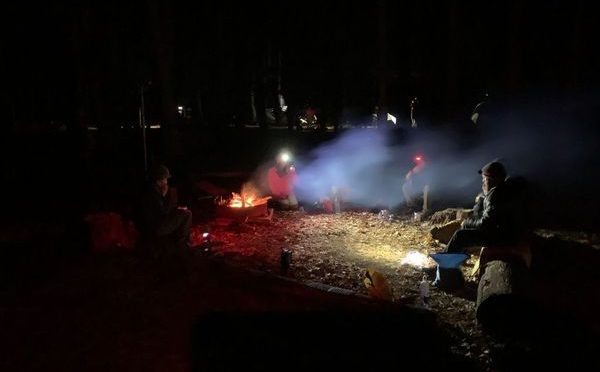
This weekend, for instance, sunset is at 5:44 p.m. where we’re headed. However, both nights of our stay we’ll be camped low on the mountain, meaning we’ll lose sunlight a good half hour earlier. Sunrise the next morning is at 7:39 a.m. — again, because we’ll be well below the ridge, let’s make that 8. That’s nearly 15 hours of dark — cold dark. If there’s enough dry wood and we can get a fire going, we can shave 2-3 hours off the front end of that. Still, that’s more than half of a 24-hour day confined to a space not much longer or wider than you are, and that you can barely sit up in. That’s why adding be-prepared-for-the-long-nights as an afterthought is more than a small oversight. read more
The first time I hiked Lake Mattamuskeet was on a late November day back in the late 1990s. I was heading back from the coast and only intended to stop for a moment, stretch my legs, see tundra swans, teals or widgeons had arrived for the season. I wound up walking one of the dirt access roads around the lake for a couple of hours. The snowbirds had yet to arrive from the north — or maybe some had and I just didn’t notice. Rather, I was taken by the sweeping view across the lake, the endless blue sky, the quiet. Ever since, when I’ve been to the coast in winter I’ve tried to spend time hiking Lake Mattamuskeet or one of the other National Wildlife Refuges along the coast.read more