A reminder that if you want to catch good fall color but don’t have time to drive to the mountains, nature’s autumn display is starting to play in the Piedmont. The N.C. Division of Tourism, Film and Sport’s Development is keeping tabs on the evolving fall show at Piedmont Foliage Reports, with various state parks, natural areas and recreation areas weighing in. According to the most recent reports, as of Wednesday Kerr Lake State Recreation Area reported it was “about 60 percent on the way to peak.” Pilot Mountain State Park is being to bloom as well, while at Mayo River State Park there’s still “some green, but we are beginning to see more yellow, gold and some orange in the foliage now.”
Find the full report here.read more
Wings Over Water is underway at the coast, there’s a family bike ride through the autumnal Piedmont and there’s a chance to view the high country’s peak color from a peak.
Coast
If you’re into nature, and especially the nature of the coast, then drop what you’re doing and head to the Outer Banks region, where the annual Wings Over Water celebration is underway (it started yesterday and runs through Sunday). On tap: guided birding trips, art and photography workshops, tram tours of National Wildlife Refuges, guided kayak and canoe tours, a visit to an ancient maritime forest and more. Programs are scheduled in Dare, Currituck, Tyrrell and Hyde counties.read more
In September, GetGoingNC.com made the transition from telling you what you can do to showing you: we started GetHiking! Triangle, which leads weekly hikes in the Triangle and beyond. Our target audience: newcomers to hiking and established hikers interested in learning new trails. The initial response has exceeded our expectations. We currently have 344 members and have attracted more than 50 people to our hikes.read more
Monday — never an easy time for the outdoors enthusiast. After a weekend of adventure, returning to the humdrum work-a-day world can make one melancholy. To help ease the transition, every Monday we feature a 90 Second Escape — essentially, a 90-second video or slide show of a place you’d probably rather be: a trail, a park, a greenway, a lake … anywhere as long as it’s not under a fluorescent bulb.
Today’s 90-Second Escape: Fall color — looking ahead by looking back.read more
The dogwoods and sourwoods were ablaze at Hanging Rock State Park two weekends ago.
Late last week I had a great idea. If you’re planning a trip to the mountains to catch the fall color, you check out the Weekly Fall Forecast and Color Report issued by the Asheville Chamber of Commerce, Asheville Convention & Visitors Bureau and the Buncombe County Tourism Development Authority. There, you can find updated reports from throughout the mountains about what colors are popping where.
But what if you don’t have time to drive to the mountains? Or what about when the season has peaked there and is blooming closer to home (assuming that home is in the Piedmont)?
Why not do a similar report for the Piedmont? I thought. I could do it based on reports from the dozen or so state parks, recreation areas and natural areas spread throughout the Piedmont. What brilliant idea!
Apparently the North Carolina Division of Tourism, Film and Sports Development thought so, too, because they’re already doing it.
From this week’s report, for instance, we learn that as of Monday, “you can see a small change in color with yellows being the most predominant” at Raven Rock State Park near Lillington. And as of Wednesday at Falls Lake State Recreation Area in the Triangle, “Hickories are a nice golden yellow, and sweetgums and poplars continue to turn yellow as their leaves fall. The oaks and maples are still holding onto their green colors but should start to transition soon.” Other reporting stations since Oct. 1 include Haw River State Natural Area, Pilot Mountain State Park, Crowders Mountain State Park, Hanging Rock State Park, Mayo River State Park, Kerr Lake State Recreation Area, Eno River State Park and Lake Norman State Park.
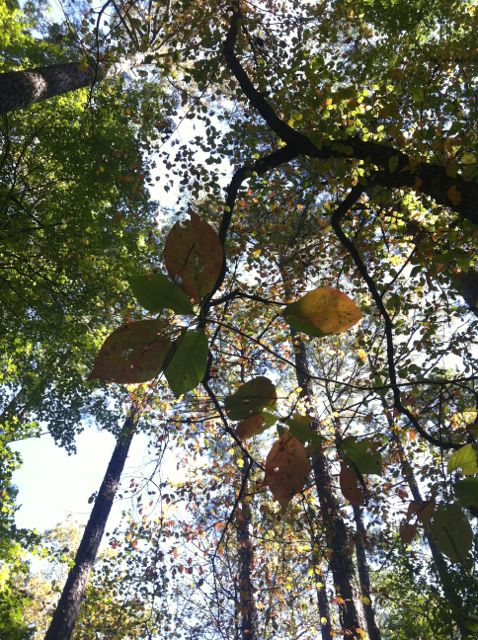
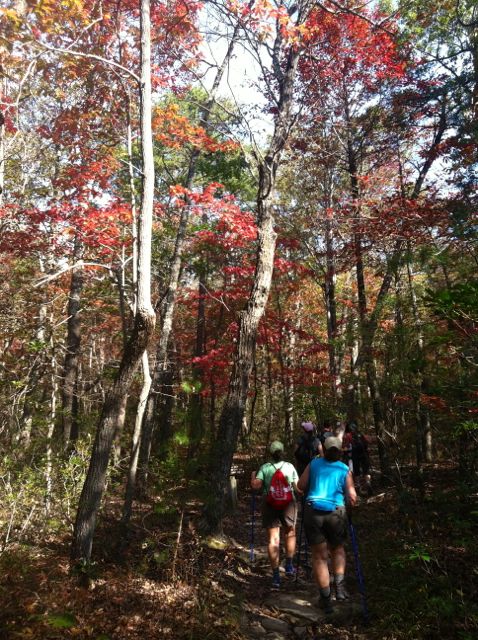
Personally, within the last week and a half I’ve seen the dogwoods and sourwoods add to the tableau at Eno River, Falls Lake and UmsteadState Park with flashes of red and maroon. Color may not be close to peaking in the Piedmont, but it’s certainly starting to show. And based on the forecast for next week, there could be a significant uptick in color next weekend: temperatures are expected to cool significantly, with overnight lows dipping into the 30s. Cold snaps are one event that can significantly accelerate fall’s color display.
To recap:read more